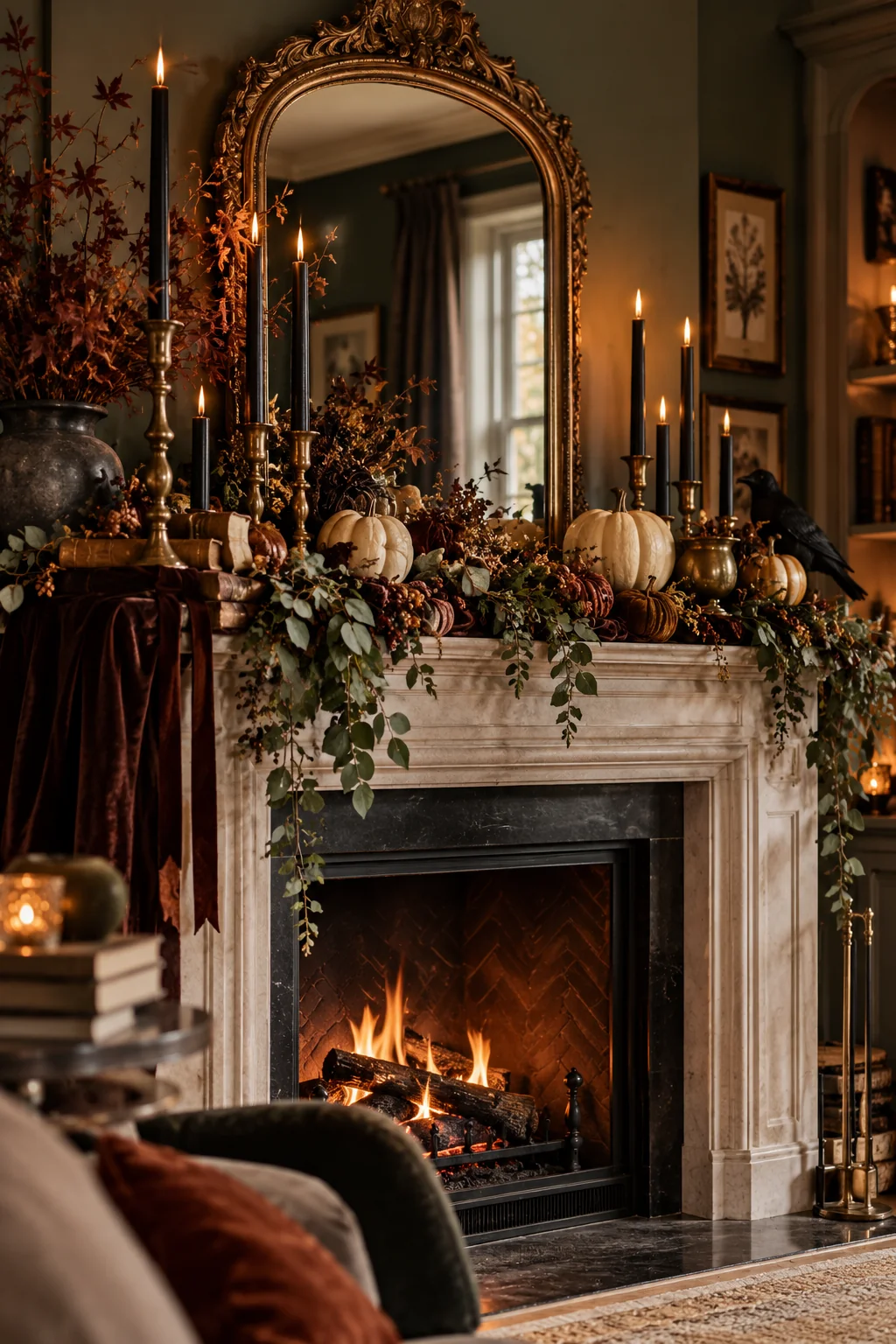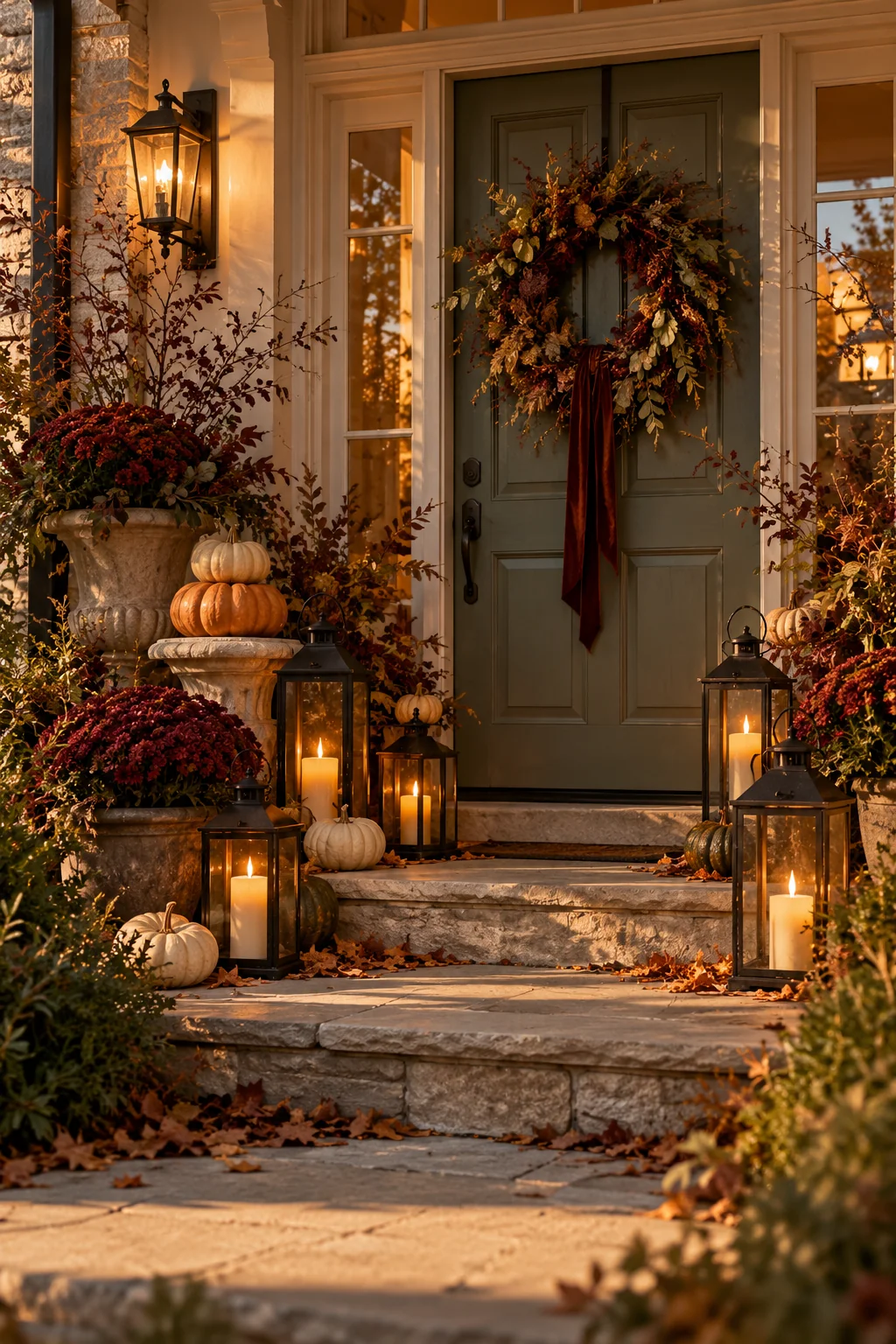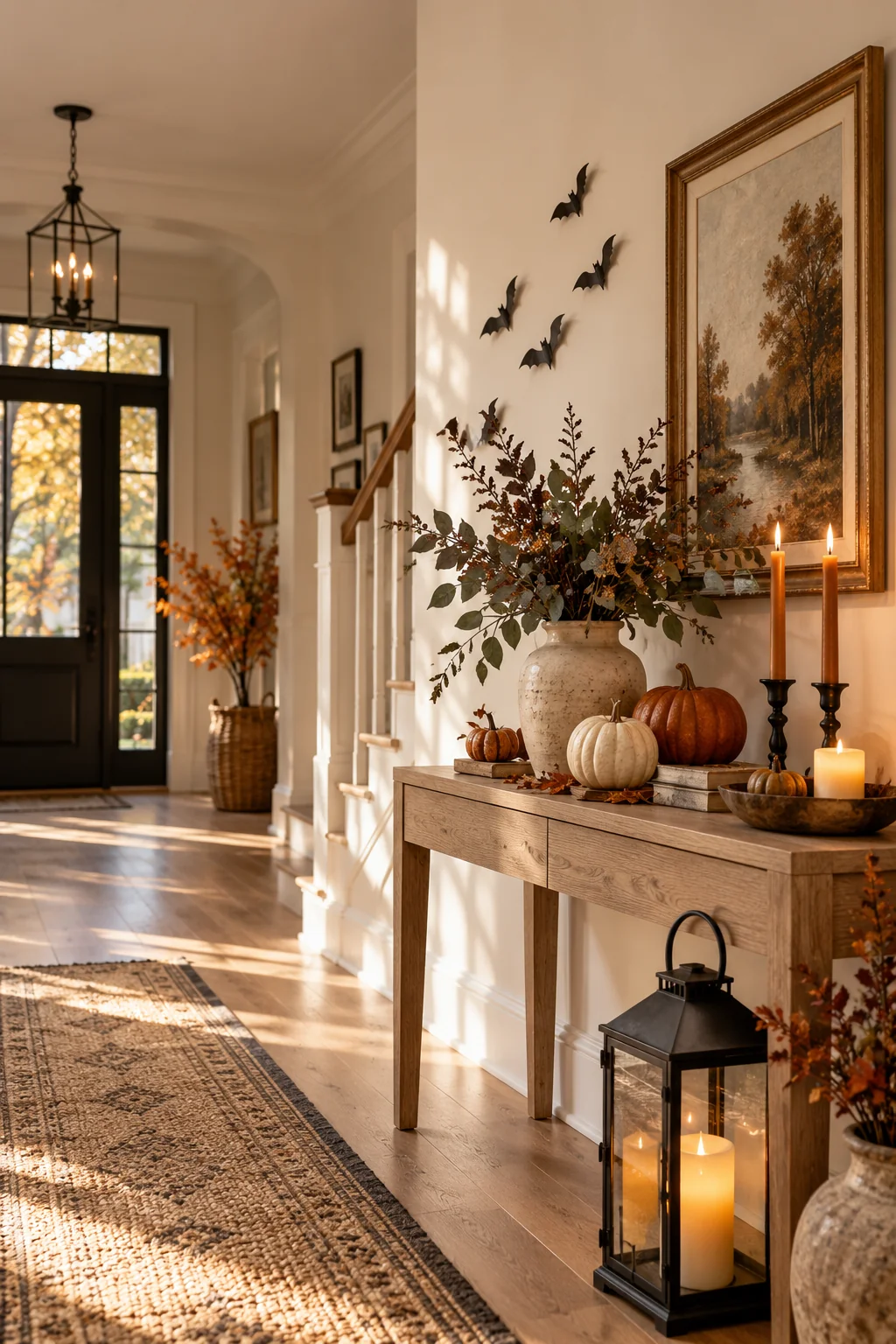
Halloween does not need bright orange or novelty props to read clearly. A restrained palette of cream, charcoal, warm wood and muted pumpkin tones can feel festive while staying calm enough for everyday living.
Start with a three-color formula
Choose one light neutral, one dark anchor and one warm seasonal accent. Cream or warm ivory keeps a room open. Matte black gives the eye a place to land. Rust, terracotta or muted pumpkin adds the seasonal signal. When those three colors repeat across a room, even a small amount of Halloween decor looks intentional.
If your home already has beige, oak, linen or brown upholstery, do not fight it. Treat those existing finishes as part of the palette. Add black in small doses and let pumpkin tones act as the bridge between fall and Halloween.
Use texture instead of adding more colors
Neutral schemes can feel flat when every surface is smooth. The easiest fix is texture: soft cheesecloth, linen ribbon, unfinished wood, woven baskets, knit pumpkins, velvet, aged metal and real or faux branches. These materials create contrast without introducing another competing color.
- Soft texture: linen, cotton, velvet and knit pumpkins.
- Natural texture: wood beads, baskets, branches and dried leaves.
- Dark structure: black lanterns, candleholders or frames.
- Reflective accent: a small amount of aged brass can warm the palette.
Repeat black in three places
One isolated black object can look accidental. Repeating black three times makes it part of the room. In an entryway that could be a lantern, a small bat cluster and a dark frame. On a mantel it could be black tapers, a dark runner and one vintage-inspired object. The pieces do not need to match exactly; they only need to share enough visual weight to connect.
Keep the spooky cue small
Neutral Halloween works best when the holiday cue is clear but controlled. One flight of bats, a single ghost silhouette, dark taper candles or one vintage-style Halloween object is usually enough. The rest of the display can stay fall-forward with pumpkins, leaves and warm light.
This approach also makes the decor easier to transition after October 31. Remove the bats or dark novelty object and the remaining pumpkins, branches and lanterns can continue through Thanksgiving.
Room-by-room ideas
Entryway
Use a low group of muted pumpkins, one taller vase and a black lantern. Keep the wall mostly open so the display does not overwhelm a narrow space. Our cozy Halloween entryway guide shows a complete formula.
Living room
Repeat the palette across only two or three zones, such as the coffee table, mantel and one pillow or throw. Avoid placing a Halloween object on every surface. See the cozy Halloween living room guide for a room-level approach.
Mantel or shelf
Concentrate the darkest objects in one cluster and leave negative space around them. This creates a collected look instead of a symmetrical display. For a darker version, use the black, brass and pumpkin mantel formula.
What to buy first
If you are building the look from scratch, prioritize pieces that can work beyond Halloween: black lanterns, flameless candles, neutral pumpkins, a simple vase and one natural-texture garland. Add holiday-specific pieces last. That keeps the budget focused on items you can reuse next year or through the rest of fall.
Common mistakes to avoid
- Using five or six neutral shades without one dark anchor.
- Buying too many tiny objects instead of a few larger pieces.
- Making every surface equally busy.
- Calling a product “vintage” or “antique” when it is only vintage-inspired.
- Assuming an indoor decorative item is suitable for an exposed porch.
A simple neutral-Halloween checklist
Before you add another item, ask: does the room have one light base, one dark anchor, one warm seasonal color, at least two textures and one obvious Halloween cue? If the answer is yes, the display is probably finished.
Make the look your own.
Use the proportions, textures and styling principles as a starting point. Adapt the pieces to the scale of your home, and choose what you will enjoy using again next season.
Explore more seasonal ideas