Lanterns are useful Halloween decor because they add black structure and warm light without forcing a room into a novelty theme. The same lantern can often work from early fall through winter.
Choose scale before style
Start with the size of the space. A tall floor lantern can anchor an entryway or porch, while a tabletop console needs something smaller. Before buying, compare the listed dimensions to the furniture or doorway where the lantern will sit. Product photography can distort scale.
Use pairs when the space can support them
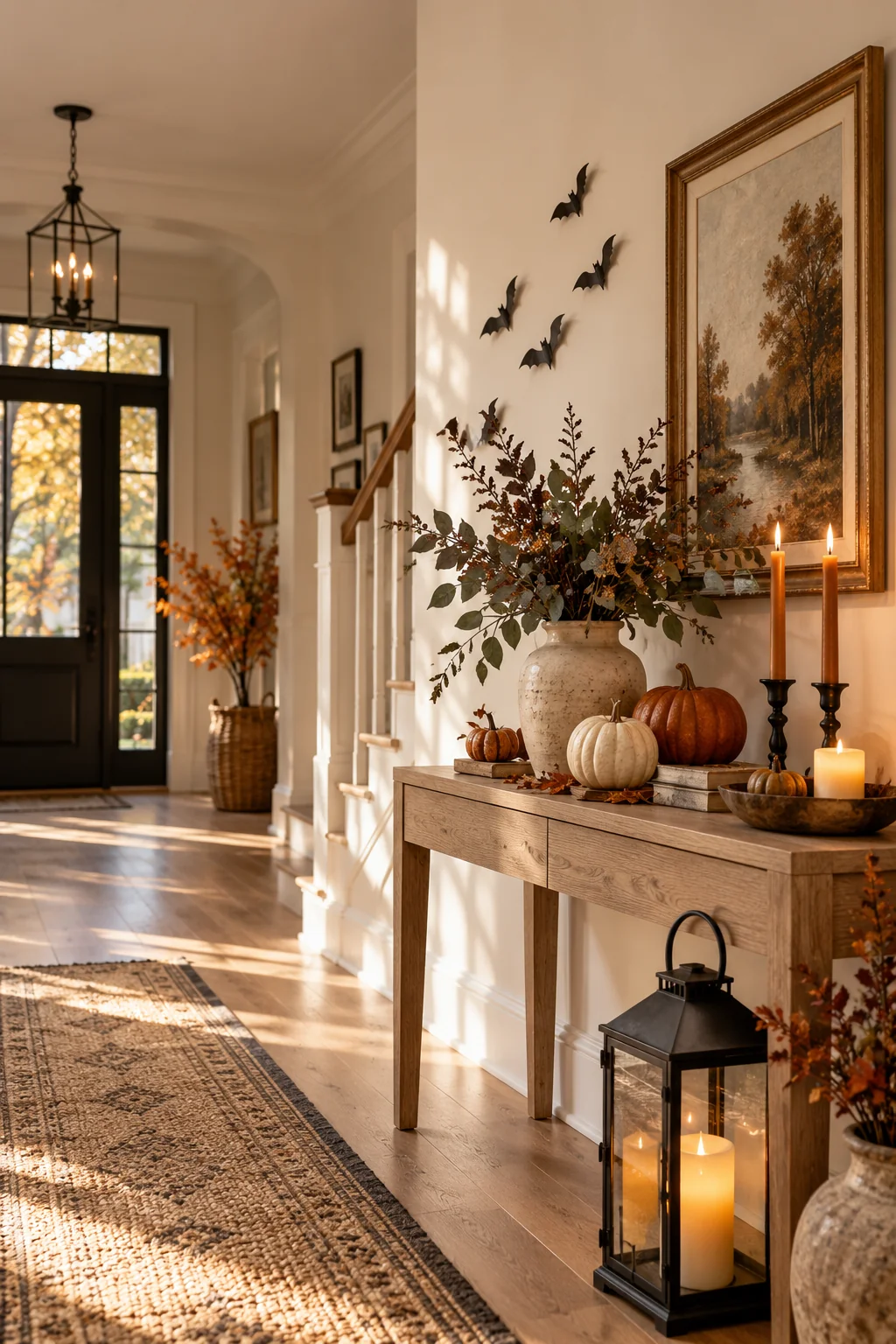
Two lanterns in different heights create an easy cluster. They do not have to sit side by side. On a porch, place the larger one closer to the door and the smaller one slightly forward or on the opposite side of a pumpkin group. Indoors, one lantern can sit on the floor while the second sits on a console.
Fill lanterns simply
Flameless pillar candles are the most flexible filler because they can stay after Halloween. Avoid stuffing the lantern with too many small seasonal objects. The lantern itself is already a strong shape; the candle and surrounding pumpkins can carry the rest of the styling.
Use warm light, not bright white
Warm candle-like light generally works better with pumpkins, wood and autumn leaves than cool white light. If a product offers several modes, verify the actual color temperature or description on the listing rather than assuming it will look warm from edited product photos.
Indoor entryway formula
Place one black lantern next to a low pumpkin cluster and balance it with a vase or branch arrangement. If the console is narrow, move the lantern to the floor. Our cozy Halloween entryway guide shows this relationship.
Mantel or hearth formula
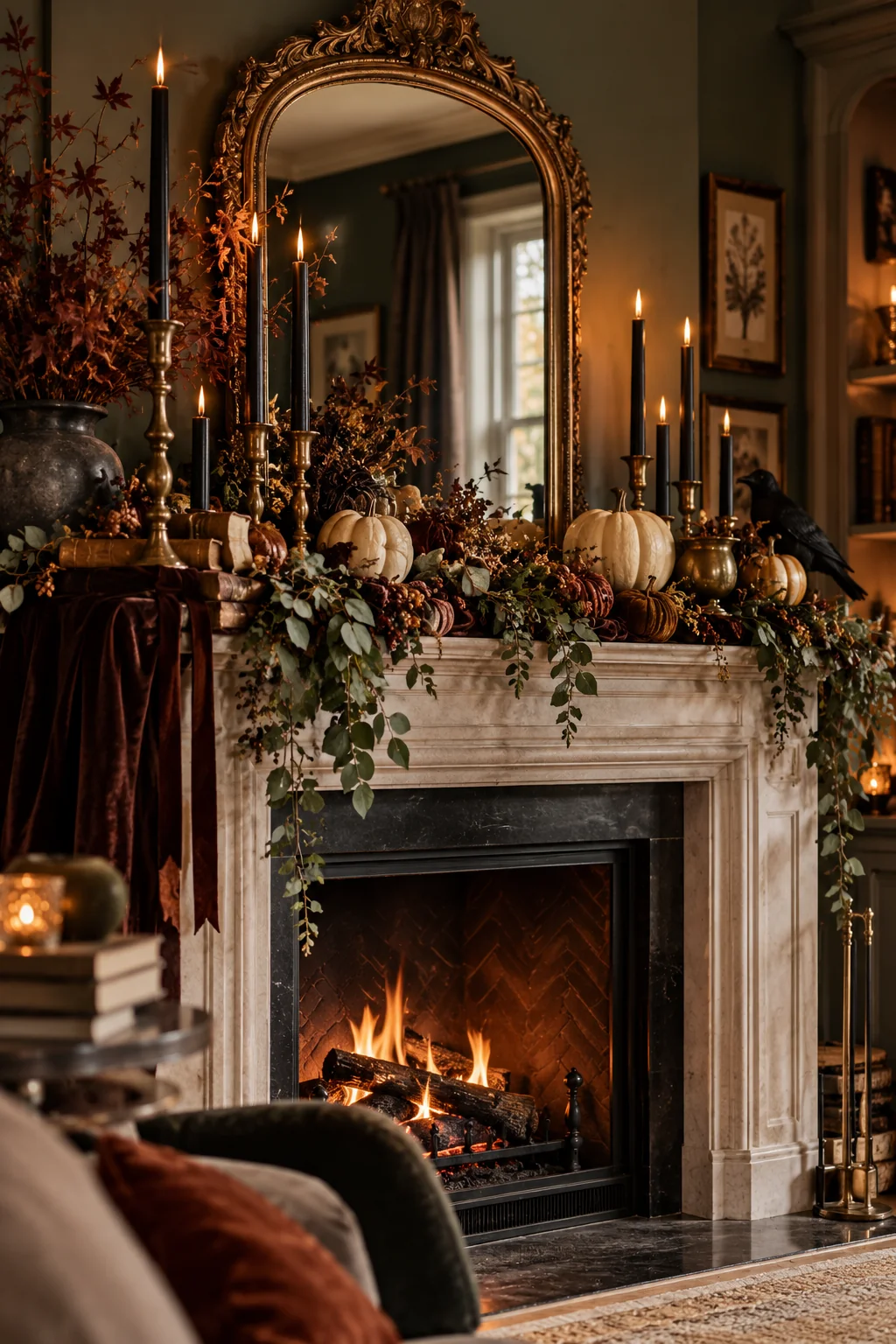
Use lanterns only if the scale fits the architecture. On a small mantel, taper candles usually take less visual space. A lantern can work better on the hearth or floor beside the fireplace. Keep decorative fabric and other materials away from real flame; flameless candles are easier around seasonal textiles.
Porch formula
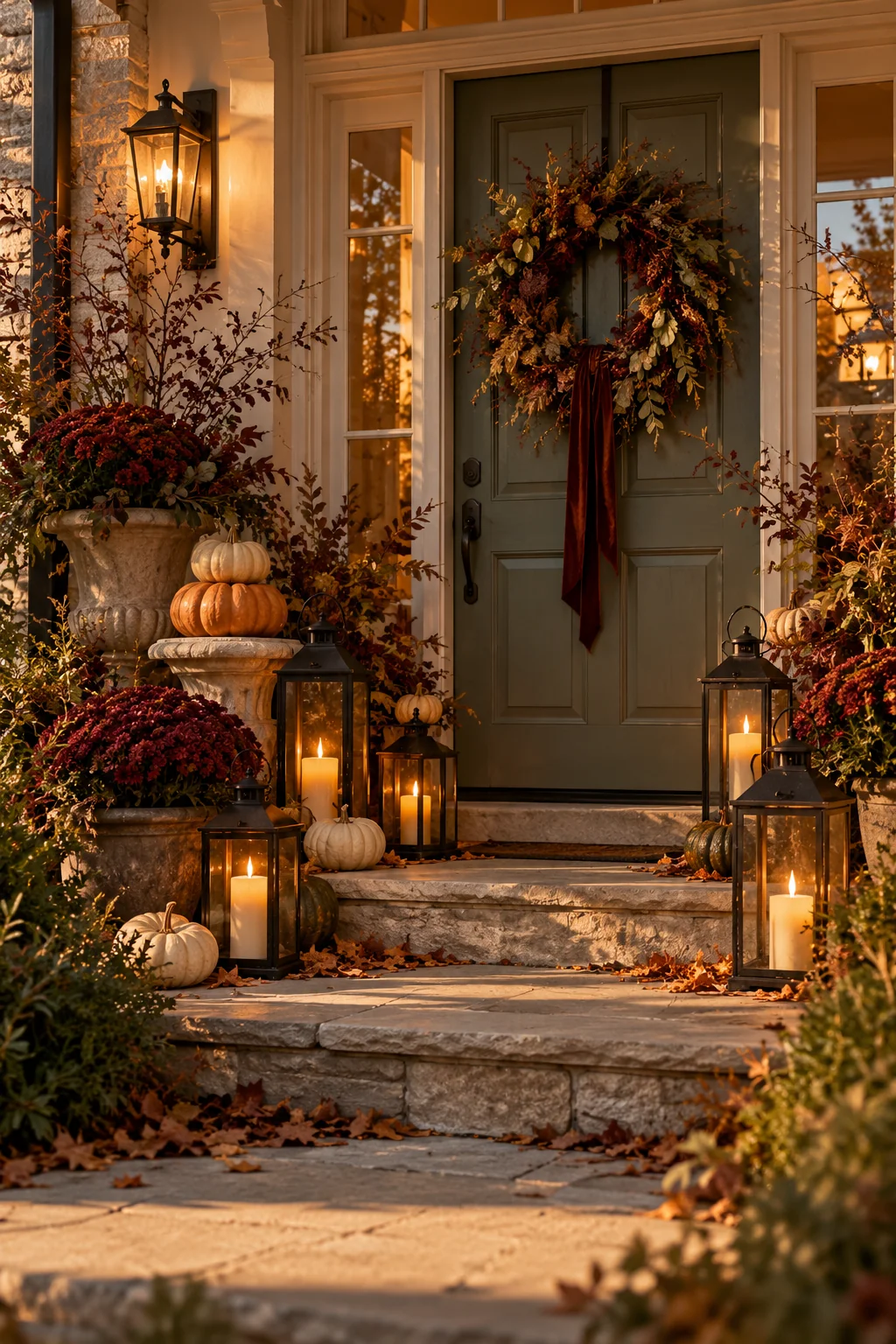
Use lanterns to frame the doorway or balance a larger pumpkin-and-planter cluster. Keep the walking path clear. Most importantly, verify whether a specific lantern is intended for indoor use, covered outdoor use or fully exposed outdoor conditions. Those claims are not interchangeable.
Make lanterns work beyond Halloween
For October, pair them with pumpkins and one black Halloween cue. In November, remove the spooky element and keep the pumpkins. In winter, swap the pumpkins for greenery or pinecones. This is one reason a simple black lantern is often a better long-term purchase than a highly themed Halloween light.
Common lantern mistakes
- Buying a lantern without checking its actual height.
- Blocking a doorway or narrow hall with a floor lantern.
- Assuming “outdoor style” means weatherproof.
- Using real candles near fabric, dried leaves or other combustible decor.
- Adding so many fillers that the lantern no longer reads as a clean structural element.
Make the look your own.
Use the proportions, textures and styling principles as a starting point. Adapt the pieces to the scale of your home, and choose what you will enjoy using again next season.
Explore more seasonal ideas