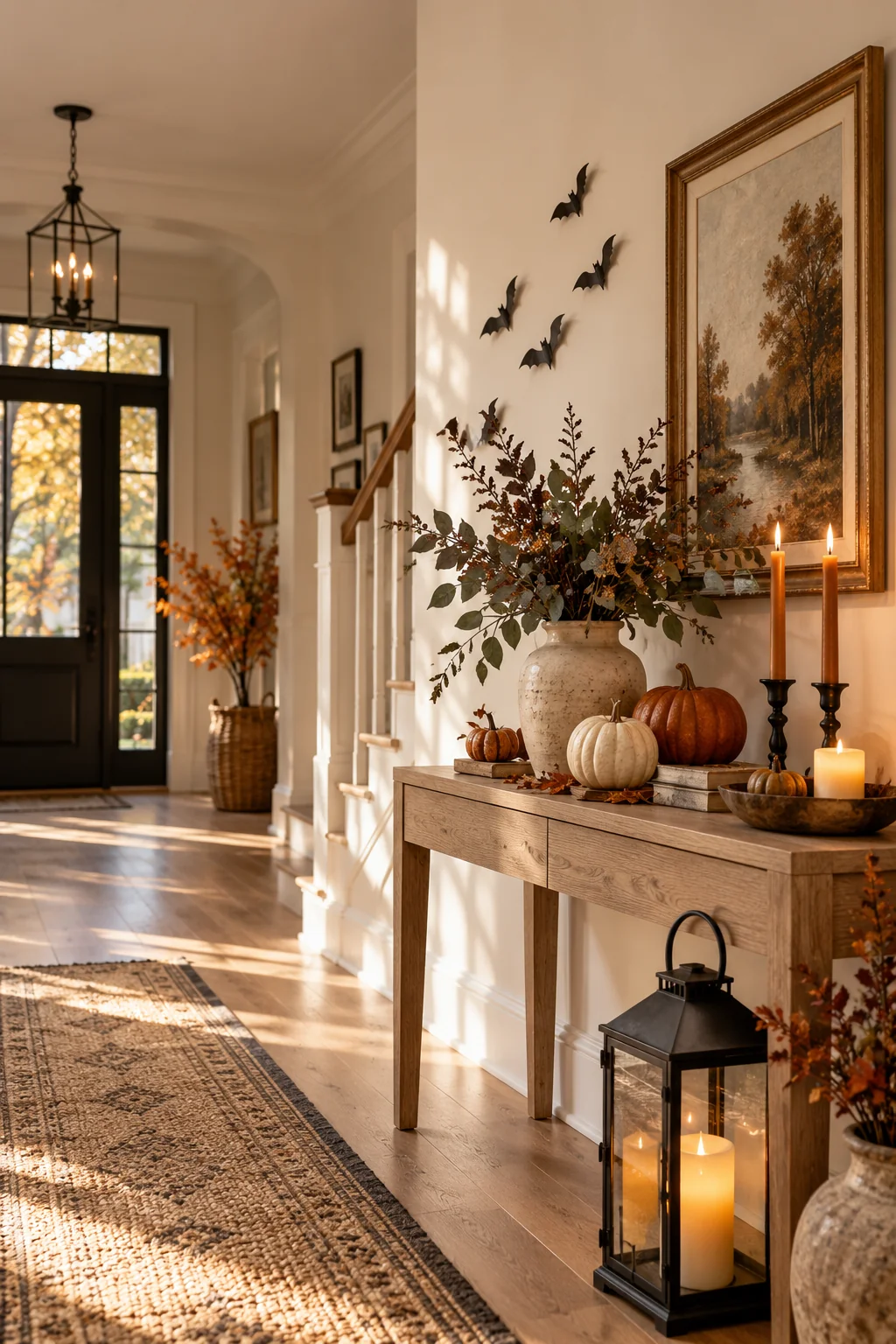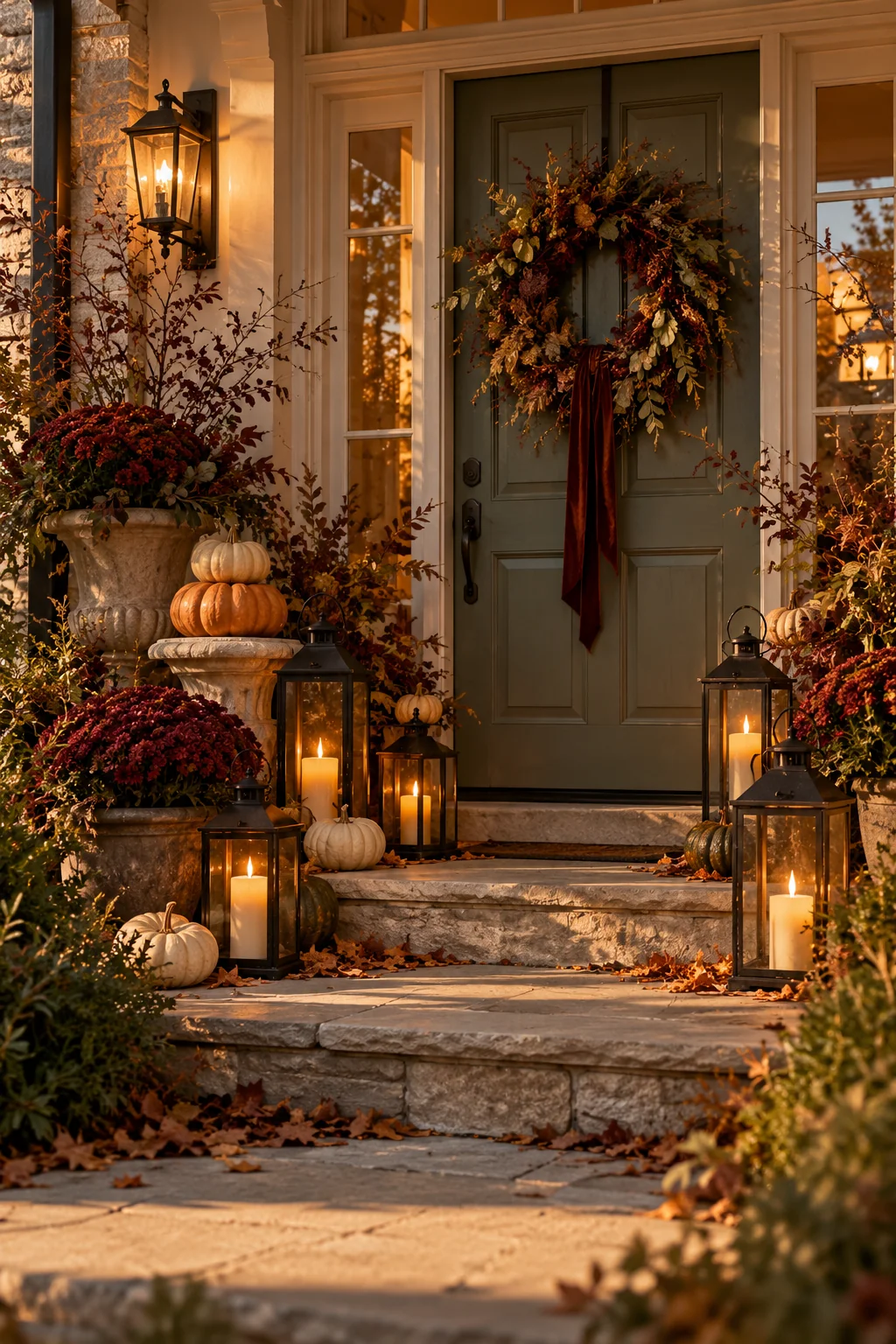
A living room can feel clearly seasonal without turning every surface into a Halloween display. The easiest approach is to decorate a few high-impact zones and repeat one palette across them.
Pick two or three decorating zones
Choose the places the eye naturally notices first. In most living rooms that means the mantel or media console, coffee table and one soft-furnishing area such as the sofa. Decorating those zones is usually enough. Leave side tables, bookcases and pathways quieter so the room still functions normally.
Use one palette across the room
A reliable cozy palette is warm cream, muted pumpkin, natural brown and matte black. Cream keeps the room soft, orange or rust provides the seasonal signal, and black adds just enough Halloween contrast. If your room is already dark, invert the formula and use more cream or warm wood to keep the result from feeling heavy.
Layer the mantel first
The mantel or primary console is the strongest focal point, so finish it before buying accessories for the rest of the room. Try one vertical element, one candle cluster, a small group of pumpkins and one darker Halloween cue. Our vintage mantel guide gives a darker black-and-brass version.
Keep the coffee table low and usable
Use a tray to contain the display. A small pumpkin, flameless candle and short branch or bead garland are enough. Leave at least half of the table usable for drinks, books or daily items. Low decor also keeps the sightline open between seating areas.
Add Halloween through textiles sparingly
One seasonal pillow or throw can carry a lot of color. You do not need matching Halloween pillows across the entire sofa. If you prefer a quieter look, choose a rust, charcoal or brown textile that can stay out through November instead of a graphic Halloween print.
Use lighting to make the room feel seasonal
Warm lighting often creates more atmosphere than another decorative object. Table lamps, flameless candles and lanterns can create pools of light that make pumpkins and dark accents feel richer. Avoid making the room so dim that it becomes uncomfortable for normal use.
Bring in one graphic cue
A bat cluster, one dark silhouette or a small piece of seasonal art makes the room read as Halloween. Concentrate it in one area instead of repeating the same motif everywhere. That restraint is what separates a styled room from a party setup.
Ideas for small living rooms
- Decorate vertically instead of adding more floor objects.
- Use a single tray so small pieces read as one composition.
- Choose flameless candles rather than large lanterns when surfaces are narrow.
- Keep the main walking path completely clear.
- Store everyday objects before adding seasonal pieces so the room does not become visually crowded.
A five-minute styling check
Stand at the room entrance and identify the first three things you notice. If all three are Halloween objects, remove one. If none are seasonal, strengthen the main focal point rather than scattering more small decor around the room.
Make it easy to transition into November
Use pumpkins, warm textiles and branches as the base, then layer in black Halloween details on top. After October 31, remove the bats, dark silhouettes or themed art. The remaining room still works for late fall.
For more transitional ideas, see how to move from fall decor into Halloween.
Make the look your own.
Use the proportions, textures and styling principles as a starting point. Adapt the pieces to the scale of your home, and choose what you will enjoy using again next season.
Explore more seasonal ideas