Black creates the Halloween mood; aged brass keeps it warm. Together they make a useful palette for mantels, shelves, consoles and dining areas without relying on novelty props.
Why black and brass work together
Halloween already has strong visual associations with black. The risk is that a room can become cold or harsh when black is used alone. Brass introduces warmth and a little reflection, especially around candlelight. The result feels moody without becoming flat.
The key is proportion. Let black do most of the structural work and use brass as an accent. A practical starting point is roughly three black elements for every one or two brass elements.
Build the look in five layers
- Dark base: black cheesecloth, a charcoal runner or a dark tray.
- Vertical line: taper candles or slim candleholders.
- Warm metal: aged-brass-tone candleholders or a small frame.
- Seasonal shape: muted pumpkins or gourds.
- One focal object: a vintage-inspired Halloween piece, framed art or dark silhouette.
You do not need all five layers in every space. A small shelf may only need three. A mantel can support all five because it has more horizontal room.
Choose the right black
Matte and soft black are easier to mix with warm interiors than glossy jet black. Look for iron, blackened metal, charcoal textile and painted wood finishes. If the room already contains dark furniture, repeat that existing finish instead of introducing a completely different black.
Choose brass that does not look too polished
Highly reflective gold can make this palette feel formal or glamorous. For a vintage-inspired Halloween look, aged, antique-brass-tone or brushed finishes usually integrate more naturally with pumpkins, wood and candlelight. Product listings vary, so describe the finish exactly as the listing supports rather than assuming real antique material or provenance.
Use candlelight safely
Flameless tapers and pillars are useful around lightweight fabric, faux leaves and other seasonal decor. If you use real candles, keep combustible materials well away and follow the candle manufacturer's instructions. For a styled mantel with draped fabric, flameless options are the simpler choice.
Three ways to use the palette
Vintage-inspired mantel
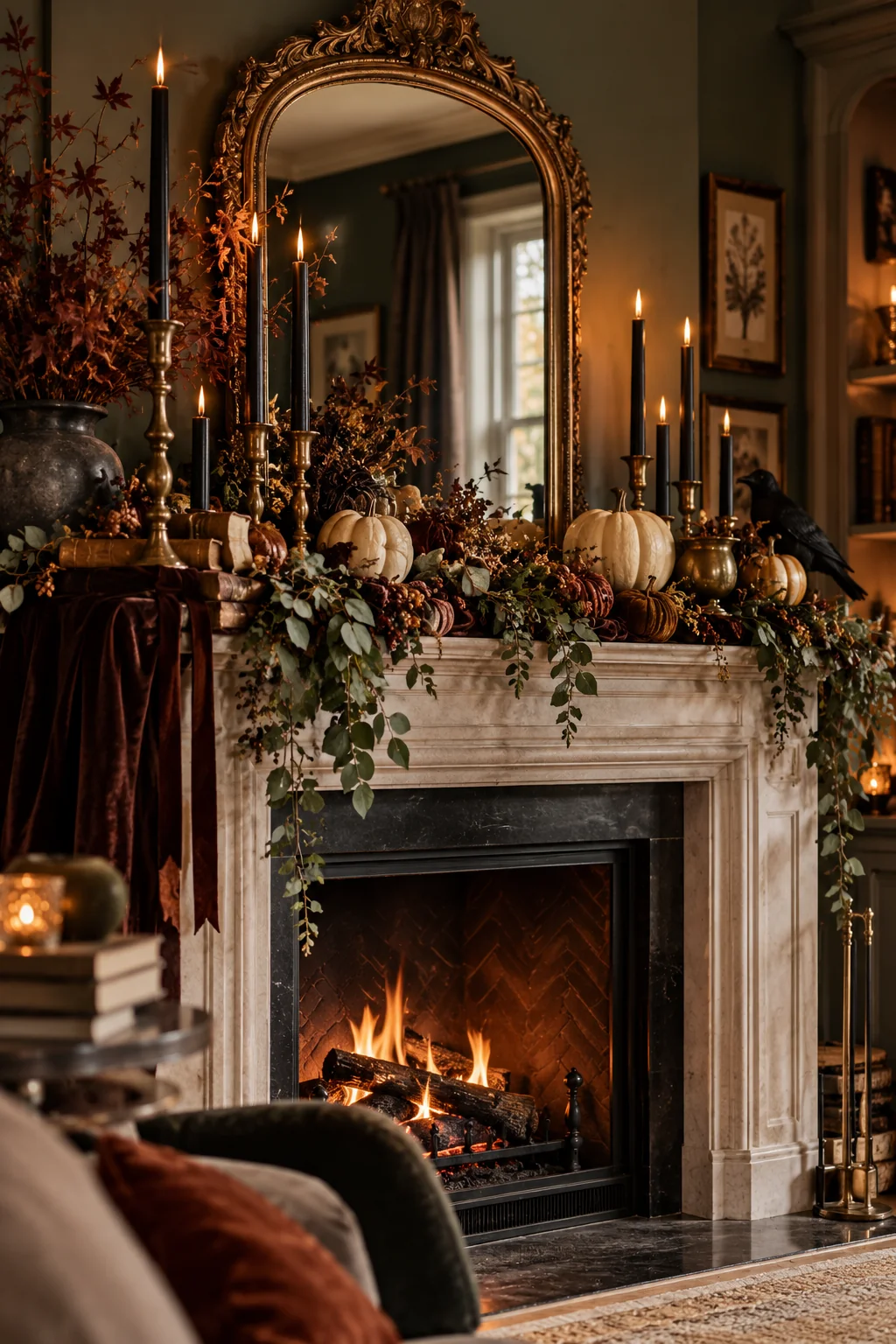
Cluster black tapers in aged-brass-tone holders, add two or three muted pumpkins, then place one focal object off center. Leave part of the mantel empty. Our vintage Halloween mantel guide shows this layout in detail.
Console table
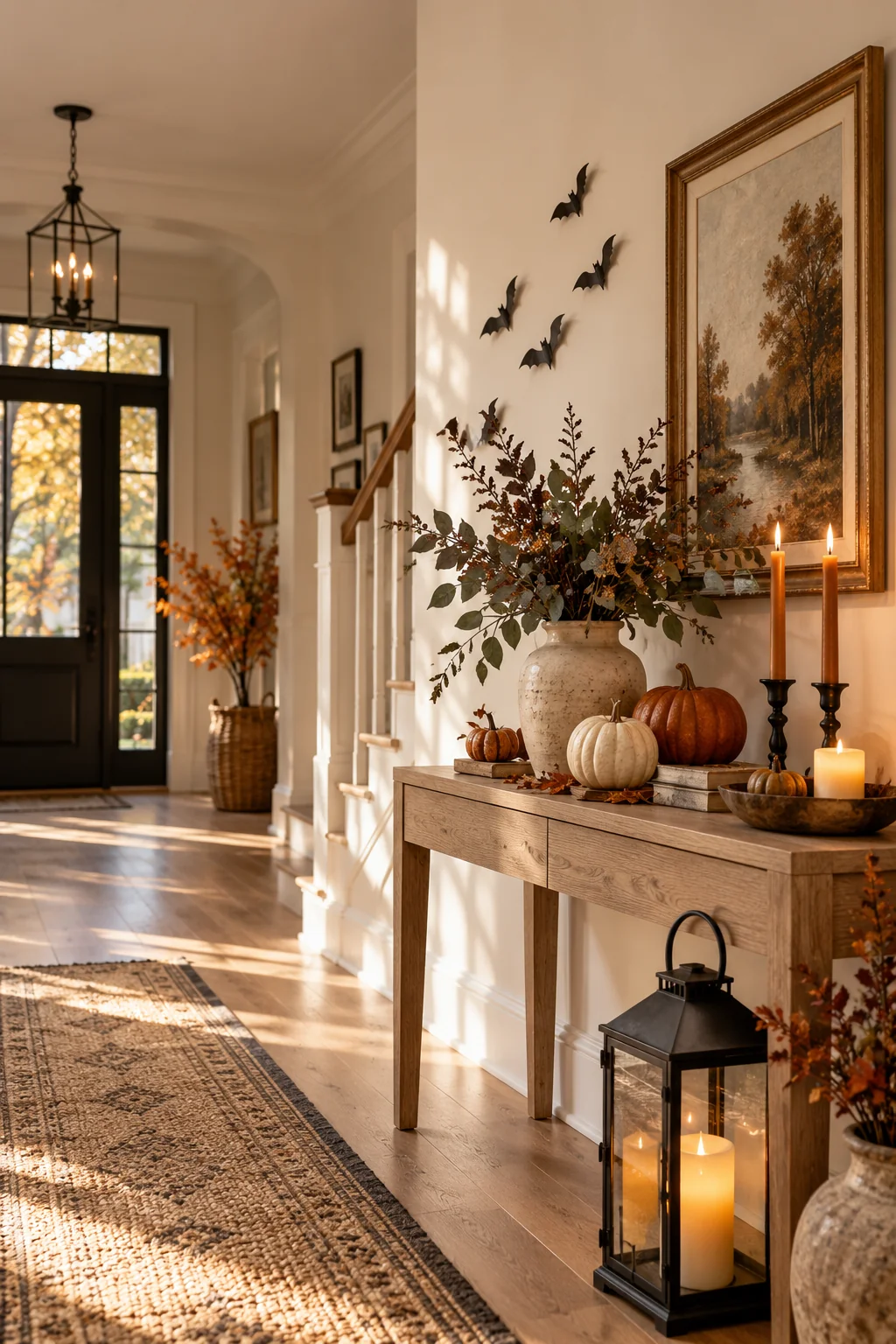
Use a black lantern as the anchor, a brass detail near the center and a low pumpkin cluster on the opposite side. Keep the arrangement shallower than a mantel display so the console remains practical.
Dining table
Run black texture along the center, then use low brass candleholders and small pumpkins so sightlines stay open. Avoid tall decor that blocks conversation.
What not to add
This palette is strongest when it stays limited. Bright purple, neon green and multiple metallic finishes can quickly break the look. If you want more color, add one muted rust or brown tone rather than a second bright seasonal color.
How to transition after Halloween
Remove the explicitly spooky object and keep the brass candleholders, pumpkins and warm textile. The same arrangement becomes late-fall decor. That reusability is one reason this palette works well for people who do not want to store a large collection of Halloween-only pieces.
For a softer version of the same idea, see our neutral Halloween color guide.
Make the look your own.
Use the proportions, textures and styling principles as a starting point. Adapt the pieces to the scale of your home, and choose what you will enjoy using again next season.
Explore more seasonal ideas